By Jordan Queira
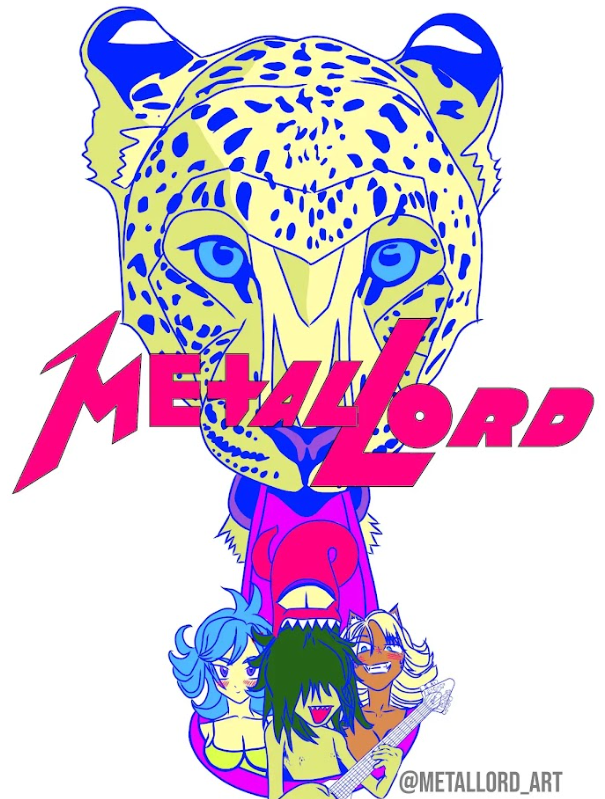
For artist David Starr, creativity has never belonged to a single medium. His work moves fluidly between classical oil painting, illustration, publishing, and music. In recent years, however, his artistic life has taken an unexpected and deeply personal direction—one that merges visual art, storytelling, and heavy metal music through an ongoing collaboration with his son, Gustav Starr. The result is Metallord, a project that blends comic books, original music, and large-scale paintings into a single evolving creative universe.
David’s artistic journey began long before gallery exhibitions or published books. Growing up near Green Bay, Wisconsin, he discovered early that drawing came naturally to him. Even as a child, he had a strong sense that art would play a central role in his life. “Ever since I could understand that doing a thing could be something you do for a living,” he recalls, “I always said I was going to be a painter.” One of the first moments he realized he had a talent for drawing came when he recreated a Sports Illustrated cover featuring basketball legend Julius “Dr. J” Erving. “It actually looked like him,” David says. “I could draw what I saw.”
That ability eventually evolved into a fascination with classical painting. While studying art in college, David became increasingly interested in the techniques used by historical painters—methods that were rarely emphasized in contemporary art programs. Rather than abandoning that interest, he began researching the techniques on his own. “I really wanted to be classically trained,” he explains. “But they didn’t really teach the old master style anymore, so I had to figure it out myself.” Through experimentation and study, he developed his own layered approach to oil painting inspired by Flemish methods, allowing him to create the luminous quality found in traditional portraiture. “Oil paint lets light pass through the layers,” he says. “It creates a glow in the flesh tones that you just can’t achieve with acrylic.”
Music was always present alongside David’s visual practice. His father played guitar casually at home, and evenings often turned into informal sing-alongs with the family. With a simple Beatles songbook and a handful of chords, music became part of the household routine. Those early moments sparked David’s own curiosity, and he soon began teaching himself guitar. Later, he studied saxophone throughout school and college, performing in both jazz and concert bands. Although music remained an important creative outlet, his professional ambitions after college focused primarily on painting.
In the early years of his career, David pursued gallery representation and began exhibiting work throughout Northeast Wisconsin before eventually connecting with a gallery in New Orleans’ French Quarter. The exhibitions were an important milestone, but they also led him to think critically about how artwork reaches audiences. Traditional gallery sales often meant that once a piece was purchased, it disappeared into a private collection. “You spend 120 hours painting something,” he explains, “and then maybe only a handful of people ever see it.” That realization sparked a shift in how he approached sharing his work.
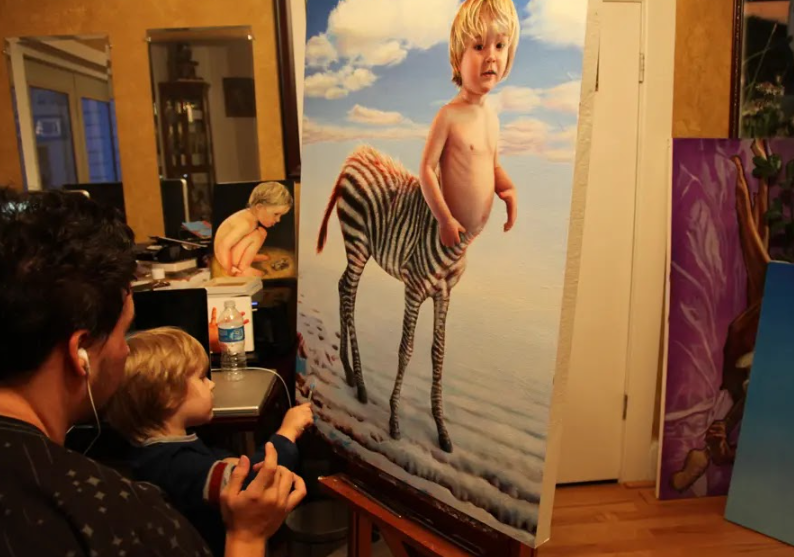
Looking to the music industry for inspiration, David began experimenting with artwork that could be reproduced and distributed more widely. One early project, titled Leger, featured a surreal character inspired by his son—a zebra centaur that emerged from a moment of unexpected visual alignment. “I had a photo of my son and a photo of a zebra colt,” he explains. “The legs lined up perfectly and I thought, ‘What if this was a zebra centaur?’” The series combined detailed graphite drawings with digital color, allowing him to maintain the physical hand-drawn quality of the work while also creating prints and publications that could reach a broader audience.
That exploration eventually led David into self-publishing. One of his most ambitious projects was a children’s book that paired baby animals with famous scientists and their discoveries. The idea came while researching historical figures and realizing how little recognition many scientists receive in popular culture. “I started reading about Archimedes and realized scientists have terrible PR agents,” David says with a laugh. The book combined detailed oil paintings with accessible scientific explanations, creating a layered reading experience that could function both as a simple alphabet book and a deeper introduction to scientific discovery. After exploring traditional publishing options, David ultimately funded the project through Kickstarter, successfully placing copies in museums and science centers.
While these projects expanded his artistic practice into publishing, the most unexpected evolution of David’s work came through creative conversations with his son, Gustav. The two frequently brainstormed ideas together, sharing an enthusiasm for comic books, science fiction, and heavy metal aesthetics. One idea in particular began to grow into something larger—a story about a musician who controls a giant robotic machine through music. “My son said, ‘What if there was a kid who could shred on guitar and awaken an ancient mech?’” David recalls.
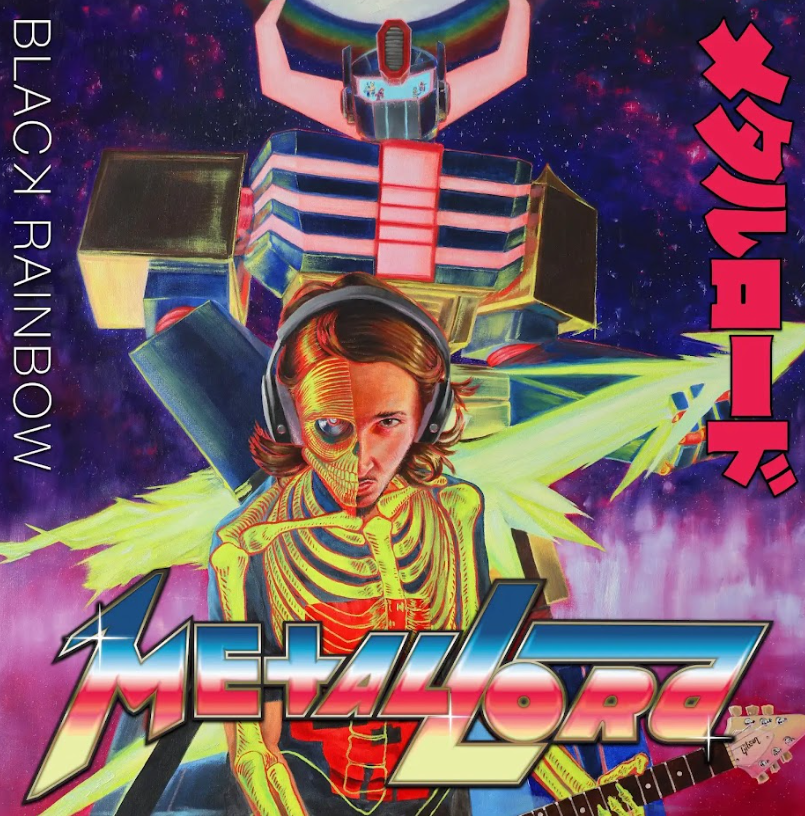
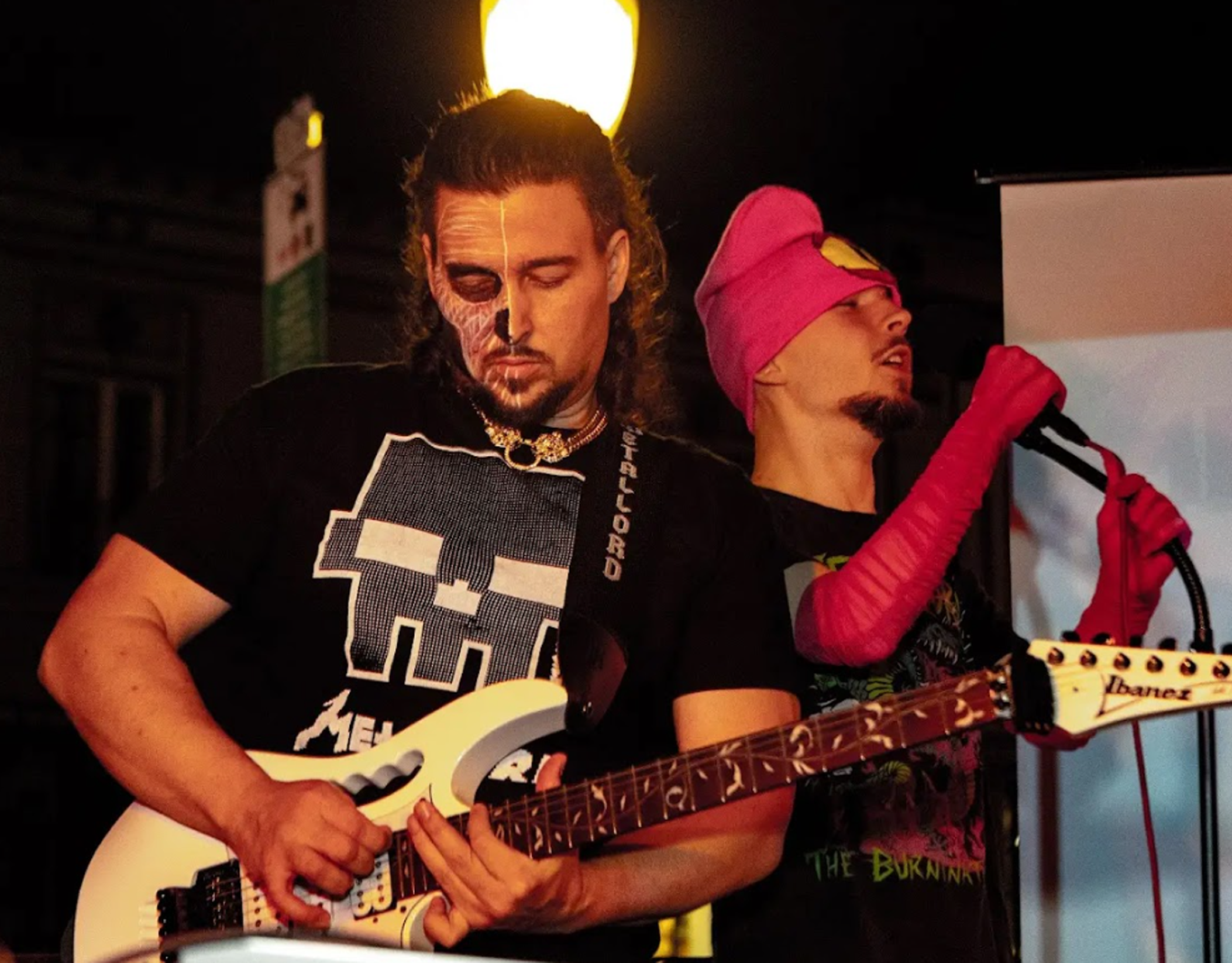
That concept became the foundation for Metallord, a comic series centered around a young guitarist who bonds with a massive mechanical warrior and battles alien forces through music. What began as a narrative idea quickly expanded into a multi-media collaboration. Gustav began producing original metal music that would serve as the soundtrack to the comic’s story, while David contributed artwork, writing, and musical ideas of his own. Over time, the collaboration evolved into a full creative partnership. “I kept saying I was helping my son with this project,” David says. “Then I realized, no—this is my band too.”
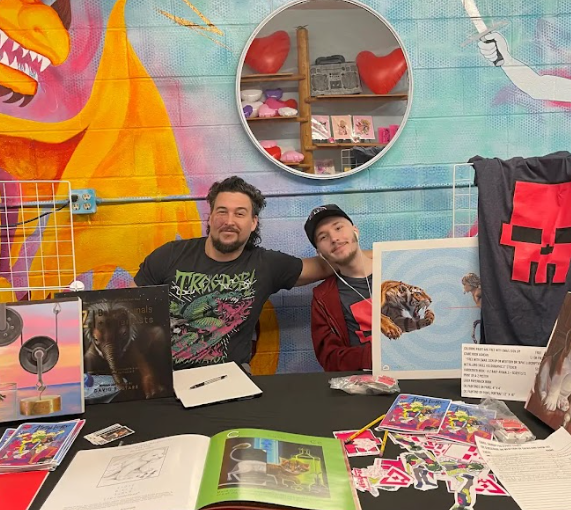
Together they recorded songs, illustrated the comic, and launched the project through Kickstarter, where supporters helped fund both the comic’s printing and the album release. The duo has since performed live shows and continued expanding the Metallord universe through additional stories and music.
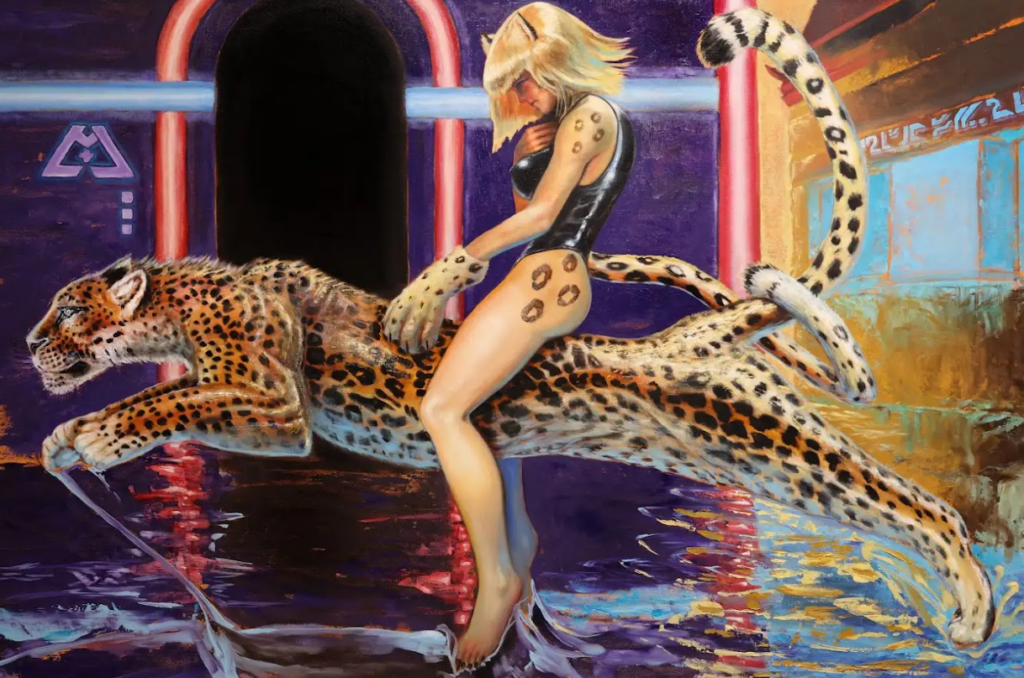
Looking back, David finds it striking how naturally the collaboration developed. While reviewing older paintings and sketches from earlier in his career, he noticed recurring imagery that now seems almost prophetic—robots, skeletons, guitars, and science-fiction themes that echo throughout the Metallord project. “When I went back through my old work,” he says, “I realized I’d already been painting robots and guitars and weird sci-fi concepts for years. It felt like everything was building toward this.”
With the first comic and album released, David and Gustav are now preparing the next chapter of the series. For David, the project represents more than simply another artistic endeavor. It is a rare opportunity to build something meaningful across generations—an evolving creative collaboration that merges painting, music, and storytelling into a shared vision.
“It’s been an amazing experience,” he says. “Getting to create something like this together has been one of the coolest parts of my career.”